
The basic derivative rules work when an expression is assembled by addition, subtraction, constant multiplication, and plain powers of . Three common structures require more care. A product contains two changing factors. A quotient contains a changing denominator. A composition sends an input through one changing function and then another. The correct derivative rule follows the structure of the original expression, not merely the symbols that are visible.
The Chain Rule deserves special attention because it is a conceptual bottleneck. It says that a total rate through a two-stage process equals the outer rate with respect to the intermediate quantity multiplied by the intermediate rate with respect to the original input. That is an ordinary rate-of-change principle, not a memorized extra factor. Product and quotient rules have the same origin: track every first-order way an output can change.
By the end, you should identify whether a function is a product, quotient, or composition before differentiating it. You should write each rule accurately and explain why the Chain Rule multiplies two rates. You should also know that one expression may require several rules in sequence. Structural reading comes before symbolic execution.
Products: both factors contribute change
If , then
The derivative is not simply . A small product change contains one contribution from changing while is held at its current value, and another from changing while is held at its current value. The change in both factors simultaneously is second-order small and vanishes after the limit is taken. This gives the Product Rule.
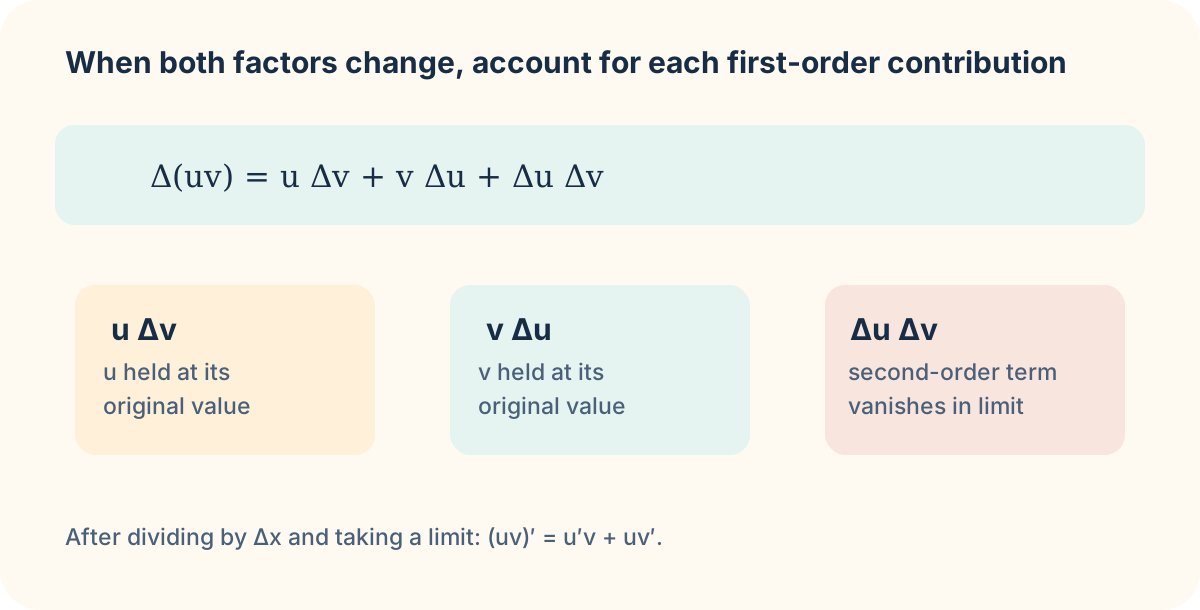
For , label and . Then and , so
Do not distribute a derivative across multiplication. It distributes across addition, not multiplication. Naming and first makes the structure visible and keeps the two terms in the correct order.
Quotients: turn a ratio into a controlled change
If and , then
The denominator is squared, and the numerator order matters. The rule can be derived from the Product Rule by writing a quotient as , then using the Chain Rule to differentiate the reciprocal. In practice, it is often safest to label numerator and denominator explicitly before substituting into the formula.
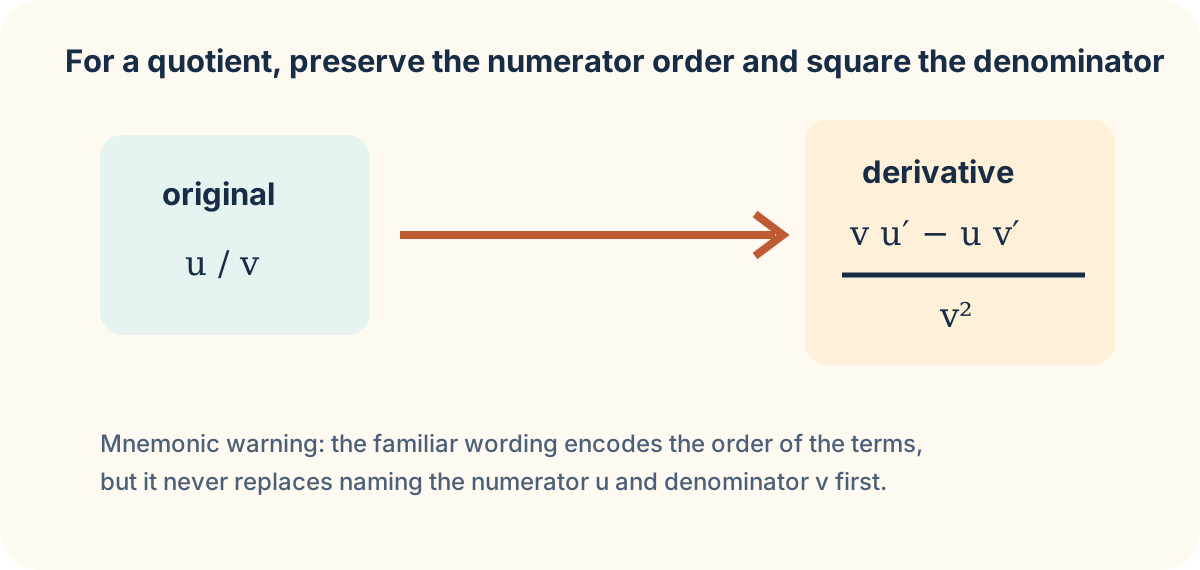
For , choose and . Then and . The derivative is
You may simplify afterward, but preserve the fact that the original function and derivative are undefined at . A derivative calculation never removes a domain restriction from the original model.
The Chain Rule tracks a rate through a composition
Suppose and . The input changes the intermediate quantity , and that changed changes . The Chain Rule is
The first factor measures output change per unit intermediate change. The second measures intermediate change per unit original-input change. Multiplying cancels the intermediate units, leaving output change per input change. This unit logic is a conceptual check: a nested process must account for both links.
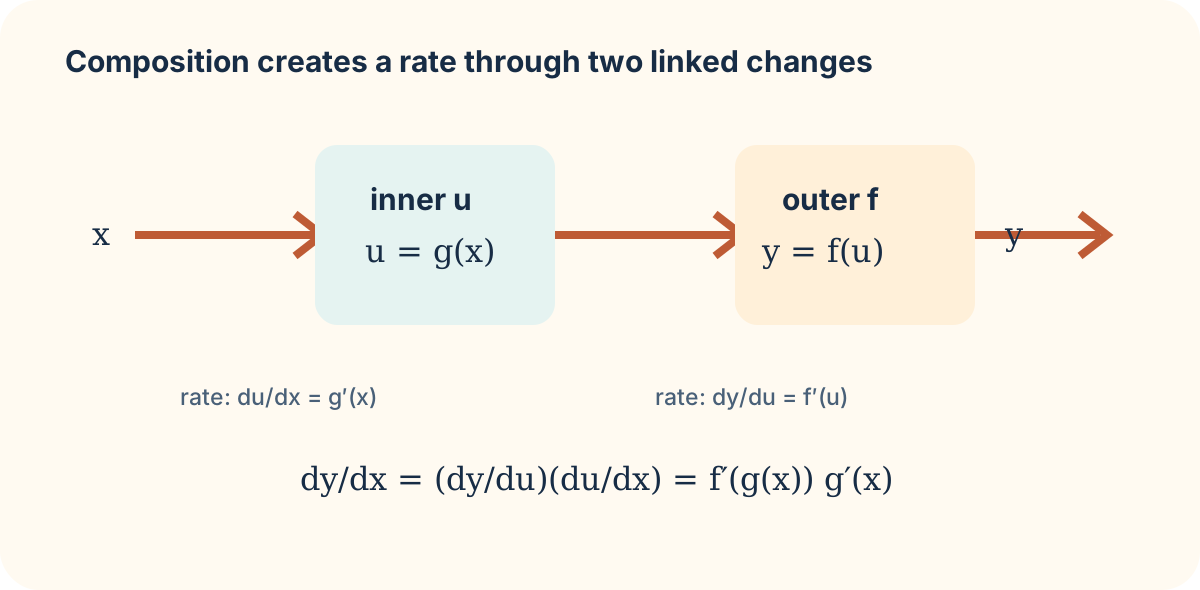
For , the outer function is and the inner function is . Differentiate the outer expression with the inner still in place, then multiply by the derivative of the inner:
The missing factor of three is the classic Chain Rule error. Saying “power rule” without identifying the inner function hides why that factor is required.
A reliable structural workflow
Start by placing parentheses around the outermost operation. Is the expression a sum, a product, a quotient, or a function applied to another expression? Apply the matching rule. Then repeat on any pieces that still contain nontrivial structure. For , the outermost operation is a quotient; the numerator also requires the Chain Rule. A single formula cannot replace this staged reading.
As a check, use a numerical slope estimate or units when a model is applied. If and a radius grows at , then the Chain Rule gives with units . The extra factor is not optional: area changes because radius changes over time.
Next, we will differentiate relations that are not solved explicitly for one variable and examine inverse functions. The same Chain Rule will appear again, this time as the reason each term involving must carry a factor of . That continuity of ideas is more valuable than a list of disconnected formulas.