
Formula reference. Calculus trigonometric inputs are in radians.
Functions and values
Tangent is undefined at for every integer . The period of sine and cosine is ; the period of tangent is .
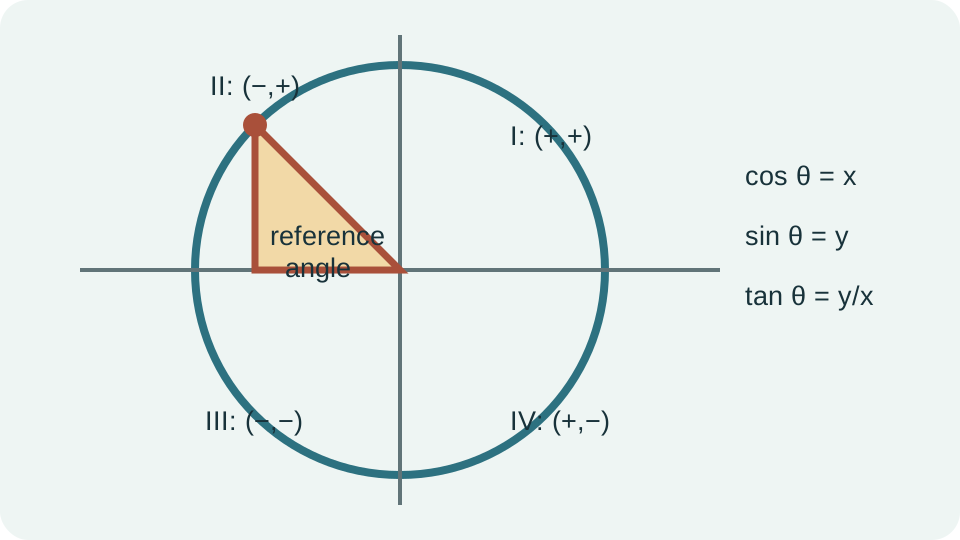
Trigonometric functions describe coordinated circular motion. Picture a point traveling counterclockwise around a circle of radius one. At an angle measured in radians, its horizontal coordinate is and its vertical coordinate is . The circle supplies the meaning; a calculator output is only a numerical report of that geometry.
Suppose a rotating sensor records its horizontal and vertical position once each second. Its two records rise and fall in a repeating pattern, but one is shifted relative to the other. That is the story behind sine and cosine graphs. Calculus later describes their instantaneous change, so it is worth anchoring their signs, period, and radian input before memorizing derivative formulas.
Use radians as the natural input
One radian is the angle that cuts off an arc equal in length to the radius. On a unit circle, the arc length and radian measure have the same numerical value. A full revolution is radians because the circumference is . This geometric connection is why derivative rules for sine and cosine use radians, not degrees.
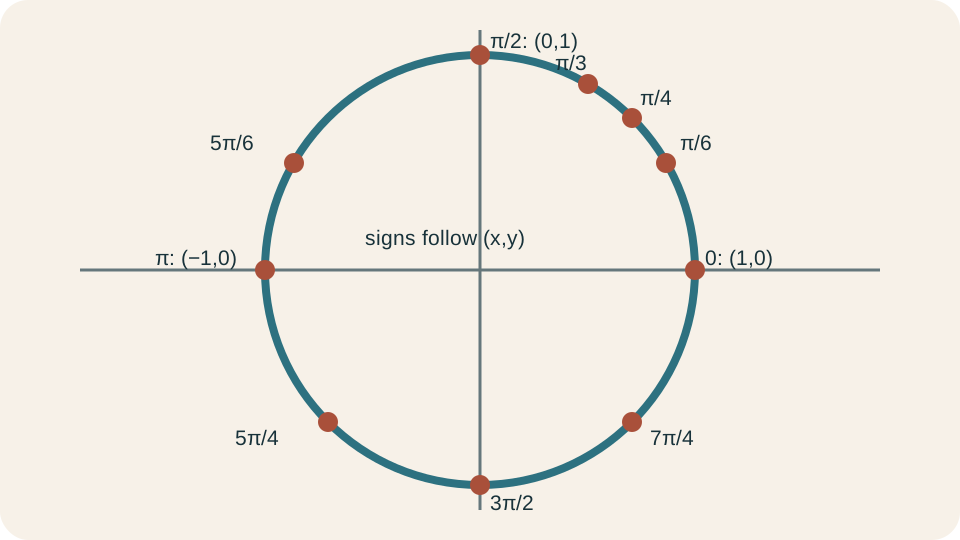
Special-angle points provide exact values. At , the point is ; at , it is ; at , it is . Sine is the second coordinate and cosine is the first. The sign of each function follows the quadrant rather than a memorized list detached from a picture.
Connect circle coordinates to graphs
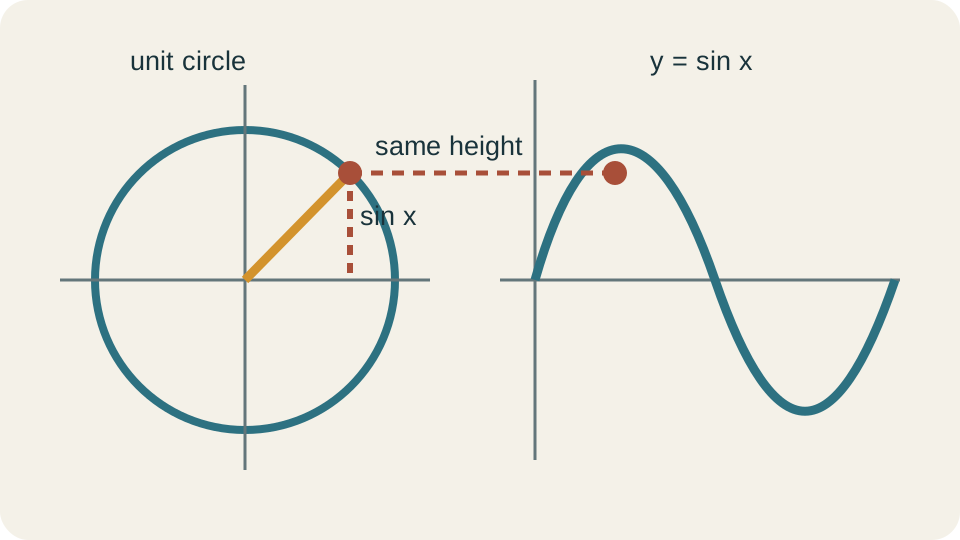
As the sensor completes one revolution, sine begins at zero, rises to one, returns through zero, falls to negative one, and returns to zero. Cosine begins at one and follows the same shape one quarter-turn earlier. Both repeat every radians: and .
Tangent is wherever . Its undefined points at are visible before any graph is drawn, because division by zero is impossible. That domain check matters whenever tangent appears in a limit, derivative, or model.
Interpret a periodic model
If a signal is , then controls vertical amplitude, controls how quickly the input moves around the circle, shifts phase, and shifts the center line. Read the units of : an angle must be dimensionless, so if is seconds, carries radians per second. This is a unit check, not a cosmetic convention.
In the sensor story, a negative sine value means the tracked point lies below the horizontal axis, not that the sensor has failed. A zero crossing tells you the vertical coordinate is zero; it does not say the point has stopped moving. The geometry gives language for interpreting the graph.
Narrative challenge: locate the rotating sensor
A unit-circle sensor is at angle . Before checking a table, decide the signs of its horizontal and vertical coordinates and determine whether is positive or negative. Then explain why the same sensor state repeats at .
Show a solution path
lies in Quadrant II, so cosine is negative and sine is positive; tangent, their quotient, is negative. The difference is one complete revolution, so the point and all three trigonometric values repeat.